How to Baby-Proof Your Home: Room by Room Guide
Disclosure: This content contains affiliate links. Purchases made through these links may earn BabyNerd a small commission. You pay the same price either way. Our full disclosure policy.
Safety disclaimer: This article shares educational information based on published guidelines from the U.S. Consumer Product Safety Commission (CPSC) and the American Academy of Pediatrics (AAP). It is not medical advice or a substitute for professional childproofing assessment. For concerns about your child’s safety or health, consult your pediatrician. For home-specific hazard evaluations, consider hiring a certified childproofing professional.
Why This Guide Exists
Once your baby starts rolling, scooting, or crawling, your home transforms from a safe haven into an obstacle course you never noticed. Electrical outlets sit at perfect eye level. Coffee table corners meet foreheads. Cabinet doors become the most fascinating toys in the house.
The numbers are stark. According to the CPSC, an estimated 2.3 million children under five are treated in emergency rooms each year for injuries that occur in the home. Many of these are preventable with basic safety measures.
This guide walks through each area of concern with specific, actionable steps based on CPSC and AAP recommendations. We are not selling you a “baby-proofing kit.” We are explaining what actually matters so you can prioritize based on your home and your budget.
When to Start Baby-Proofing
The general recommendation from pediatric safety experts: start before your baby is mobile. Most babies begin rolling between 3 and 5 months and crawling between 6 and 10 months. Getting down to your baby’s eye level (literally, on your hands and knees) is the single most effective way to spot hazards you have been walking past for years.
You do not need to do everything at once. Prioritize based on the rooms your baby spends the most time in, then expand as mobility increases.
The 7 Features That Actually Matter
1. Furniture Anchoring
What it is: Securing tall furniture, TVs, and appliances to the wall using anti-tip straps or brackets.
Why it matters: Furniture tip-overs are one of the leading causes of injury and death in young children. The CPSC reports that a child is sent to the emergency room every 17 minutes due to a furniture, TV, or appliance tip-over. Between 2000 and 2022, more than 580 children died from furniture and TV tip-overs, according to CPSC data.
What to look for: Anti-tip straps rated for the weight of your furniture. These attach to the back of the furniture and to a wall stud (not just drywall). Dressers, bookshelves, TV stands, and freestanding ranges all need anchoring. Many furniture manufacturers include anti-tip hardware with their products, but it only works if you install it.
2. Cabinet and Drawer Locks
What it is: Latches or locks that prevent children from opening cabinets and drawers containing hazardous items.
Why it matters: The CPSC recommends safety latches on all cabinets and drawers accessible to children, especially those containing medicines, cleaning supplies, laundry detergent pods, sharp objects, and small items that pose choking hazards. Poison control centers handle over 1 million calls per year involving children under six, according to the American Association of Poison Control Centers.
What to look for: Magnetic locks (no visible hardware, harder for toddlers to figure out), adhesive strap locks (easy to install, no drilling), or spring-loaded latches (inexpensive, durable). Choose based on your cabinet type and how much you want to modify your existing hardware. Magnetic locks are popular with parents because they are invisible from the outside and generally more toddler-resistant than strap-style locks.
3. Safety Gates
What it is: Barriers installed in doorways or at the top and bottom of stairs to restrict a child’s access to specific areas.
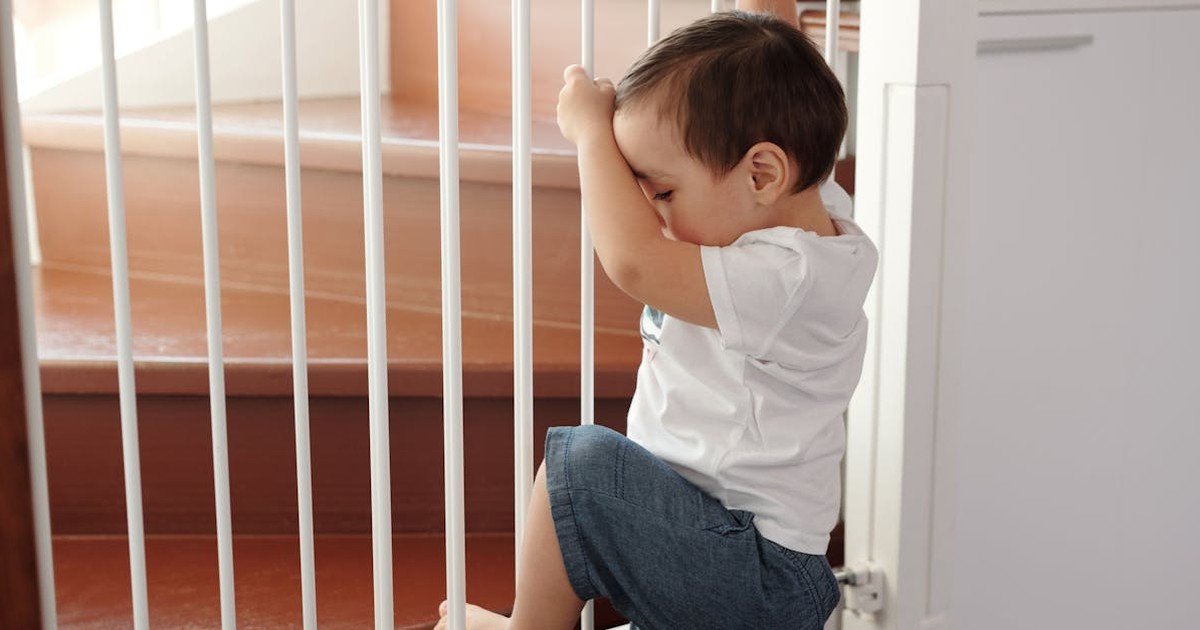
Why it matters: Falls are the leading cause of non-fatal injuries in children under five. Stairs are the primary fall hazard in most homes. The CPSC and AAP both recommend gates at the top and bottom of all staircases accessible to young children.
What to look for: Hardware-mounted gates (screwed into the wall or banister) for the top of stairs. The CPSC specifically warns against pressure-mounted gates at the top of stairs because a child can push them out. Pressure-mounted gates are acceptable for doorways and the bottom of stairs. Gates should meet ASTM F1004 safety standards. Look for a certification label from the Juvenile Products Manufacturers Association (JPMA), which means the gate has met independent safety testing standards.
4. Outlet Covers and Plate Covers
What it is: Plastic caps or sliding plate covers that prevent children from inserting objects into electrical outlets.
Why it matters: The CPSC estimates approximately 2,400 children suffer injuries from inserting objects into electrical outlets each year.
What to look for: Sliding plate covers are generally preferred over simple plug-in caps. Plug-in caps can become choking hazards if a child pulls them out (they are small enough to fit in a child’s mouth). Sliding plate covers stay attached to the outlet and slide closed automatically when the plug is removed. If you are building or renovating, tamper-resistant receptacles (TRRs) are now required by the National Electrical Code and provide built-in protection without any additional products.
5. Window Guards and Stops
What it is: Guards or stops that prevent windows from opening wide enough for a child to fall through.
Why it matters: The CPSC reports that approximately 3,300 children under five are treated in emergency rooms each year for window-fall injuries. The AAP recommends limiting window openings to 4 inches or less.
What to look for: Window guards with bars spaced no more than 4 inches apart. They should have a quick-release mechanism for emergency exit (required by fire codes in many jurisdictions). Window stops are simpler devices that prevent the window from opening beyond 4 inches. For upper-floor windows, guards are preferable to stops. Window screens alone are not strong enough to prevent falls.
6. Water Temperature and Bathroom Safety
What it is: Setting your water heater thermostat to prevent scalding and removing drowning hazards in bathrooms.
Why it matters: The AAP recommends setting your water heater to 120 degrees Fahrenheit (49 degrees Celsius) or lower. At 140 degrees, a child can receive a third-degree burn in 3 seconds. At 120 degrees, it takes approximately 5 minutes, giving more time to react. Drowning is a separate risk: a child can drown in as little as 1 inch of water.
What to look for: A water heater thermostat set at 120 degrees F or below. Anti-scald devices for faucets (these shut off flow if temperature exceeds a safe level). Toilet locks to prevent lid opening. Never leave a child unattended near any water source, even briefly. The CPSC and AAP both emphasize that no safety device replaces active adult supervision around water.
7. Smoke and Carbon Monoxide Detectors
What it is: Alarm devices that alert you to smoke or CO in the home.
Why it matters: The CPSC and the National Fire Protection Association recommend smoke alarms on every level of the home, inside each bedroom, and outside sleeping areas. Children under five are at the highest risk of fire-related death in the home.
What to look for: Interconnected alarms (when one sounds, they all sound). Test monthly, replace batteries annually (or choose 10-year sealed battery models). Replace smoke alarms every 10 years and CO detectors per manufacturer instructions (typically every 5 to 7 years).
What You Can Probably Ignore
Foam edge bumpers on every surface
You will see “baby-proofing kits” that include adhesive foam bumpers for table edges, fireplace hearths, and wall corners. While corner protectors on sharp-edged coffee tables at head height are reasonable, covering every edge in your home is not necessary. Children fall constantly as they learn to walk. Minor bumps are a normal part of development. Focus bumper use on genuinely sharp edges at your child’s head height.
Door knob covers for every interior door
Door knob covers can be useful for specific rooms (bathrooms, basements, garages), but installing them on every door creates more frustration than safety benefit. Focus on restricting access to rooms with specific hazards rather than locking down the entire home.
Expensive “smart” baby-proofing products
WiFi-connected cabinet locks, app-controlled safety gates, and sensor-based alert systems exist. For most families, simple mechanical solutions (magnetic cabinet locks, standard safety gates) do the same job at a fraction of the cost without adding battery changes or app updates to your already full plate.
Questions to Ask Yourself Before Buying
- What is the layout of your home? A single-story apartment has different needs than a three-story house with a basement. Stairs, balconies, and split-level layouts increase the number of gates and barriers you will need.
- How old is your child and what is their current mobility? A 4-month-old who is not yet rolling needs different protections than a 14-month-old who is climbing furniture. Baby-proof progressively as abilities expand.
- Do you rent or own? Renters may prefer adhesive-mount products that do not require drilling. Hardware-mounted gates at the top of stairs are the exception: the CPSC recommends them regardless, and most landlords will allow it for safety.
- Do you have pets? Some safety gates include pet doors. If you have a large dog, you will need gates rated for higher impact.
- What is your budget? You can address the highest-priority hazards (outlet covers, cabinet locks for chemicals, stair gates, furniture anchoring) for under $100. Expand from there as needed.
Common Mistakes to Avoid
1. Using pressure-mounted gates at the top of stairs
A child leaning on a pressure-mounted gate at the top of a staircase can push it loose. The CPSC specifically recommends hardware-mounted gates for the top of stairs. Pressure-mounted gates are acceptable at the bottom of stairs and in doorways.
2. Relying on window screens to prevent falls
Window screens are designed to keep insects out. They cannot support a child’s weight. If a child pushes against a screen, it can pop out of the frame. Window guards or window stops are the appropriate fall-prevention measure.
3. Baby-proofing once and assuming you are done
A 6-month-old and an 18-month-old have dramatically different capabilities. Children who could not reach a kitchen counter at 12 months may be climbing onto chairs to reach it by 16 months. Reassess your baby-proofing every 2 to 3 months as your child grows.
4. Forgetting about visiting homes
Grandparents’ houses, vacation rentals, and friends’ homes are often not baby-proofed. A small travel baby-proofing kit (outlet covers, a few cabinet locks, a portable door lock) can prevent injuries in unfamiliar environments.
Room-by-Room Quick Checklist
| Room | Top Priorities |
|---|---|
| Nursery/Bedroom | Furniture anchoring, cord-free window coverings, outlet covers, crib that meets current CPSC standards |
| Kitchen | Cabinet locks (especially under sink), stove knob covers, appliance cord management, drawer locks for sharp utensils |
| Bathroom | Water heater set to 120F, toilet lock, non-slip bath mat, medicine cabinet lock, never leave water unattended |
| Living Room | Furniture anchoring (TV, bookshelves), corner guards on sharp tables, outlet covers, fireplace hearth padding or gate |
| Stairs | Hardware-mounted gate at top, pressure-mounted gate at bottom, ensure banister gaps are under 4 inches |
| Garage/Laundry | Lock access, move chemicals to high shelves, secure heavy tools, keep laundry pod containers locked |
Ready to Compare Specific Products?
FAQ
When should I start baby-proofing?
Most pediatric safety experts recommend starting at 3 to 4 months, before your baby becomes mobile. Babies can roll off surfaces earlier than many parents expect, and crawling typically begins between 6 and 10 months. Getting the high-priority items done early means you are not scrambling when your baby suddenly starts moving.
How much does baby-proofing cost?
Basic baby-proofing (outlet covers, cabinet locks, stair gates, furniture anchors) typically ranges from $50 to $200 depending on the size of your home and the products you choose. Professional childproofing services, which include a home assessment and installation, typically run $300 to $600+ depending on your location and scope of work.
Are baby-proofing products a substitute for supervision?
No. Both the CPSC and AAP emphasize that no safety product replaces active adult supervision. Baby-proofing reduces risk by creating barriers and removing hazards, but children are creative and persistent. Gates can be climbed. Locks can be figured out. Supervision remains the primary line of defense.
What are the most dangerous household items for babies?
According to CPSC data, the top hazard categories for children under five include: medicines and vitamins, cleaning products, laundry detergent pods (which can cause serious chemical burns if bitten), button batteries (which can cause fatal internal burns if swallowed), small magnets, and window blind cords. Keeping these items locked, out of reach, or eliminated entirely (switch to cordless blinds) addresses the highest-risk items first.
Do I need to hire a professional baby-proofer?
For most homes, DIY baby-proofing using CPSC guidelines is sufficient. Professional services can be worth it if you have an older home with unusual hazards, a large or multi-level home, or if you want the confidence that comes from a trained assessment. The International Association for Child Safety (IACS) maintains a directory of certified professionals.
Safety guidelines and statistics sourced from the U.S. Consumer Product Safety Commission (CPSC) and the American Academy of Pediatrics (AAP) as of March 2026. BabyNerd has not independently tested any products mentioned in this guide.