Baby Registry Checklist 2026: What You Actually Need
Disclosure: BabyNerd earns a small commission when you purchase through our affiliate links. You never pay extra. Read our full disclosure.
Baby registries are overwhelming. There are thousands of products marketed to new parents, and it’s hard to know what you’ll actually use versus what will collect dust in a closet. This checklist cuts through the noise.
Every item below is categorized as Essential (you’ll need this from day one or close to it), Nice to Have (genuinely useful but not critical), or You Can Probably Skip (commonly registered but rarely used). Where applicable, we link to our comparison guides so you can evaluate specific products.
How to Use This Checklist
Not every family needs every item. Your feeding method, living situation, climate, and daily routine all affect what belongs on your registry. Items marked “Essential” reflect broad consensus among parents, not a universal requirement. Read the notes for context, and adjust based on your situation.
At the bottom, you’ll find budget estimates for three tiers, a list of items parents commonly over-register for, and a list of items parents wish they’d registered for.
Nursery and Sleep
Essential
- Crib or bassinet. Must meet current CPSC safety standards (16 CFR 1219/1220). No drop-side cribs (banned since 2011). Slats must be less than 2-3/8 inches apart. A firm, flat mattress is required. (Source: CPSC crib safety standards) → See our crib buying guide
- Firm crib mattress. Must fit snugly with no more than two fingers of space between the mattress and crib sides. No soft toppers, no memory foam. (Source: CPSC)
- Fitted crib sheets (3-4). Tight-fitting only. No loose blankets, pillows, bumpers, or soft bedding in the crib per AAP safe sleep guidelines.
- Sleep sacks (3-4, in multiple sizes). Replace loose blankets for safe sleep. Register for multiple sizes (newborn, 6-month, 12-month) and different TOG weights for temperature regulation. The AAP advises against weighted sleep sacks and weighted swaddles.
- Baby monitor. Audio-only monitors are functional. Video monitors are the current standard. Not a formal safety requirement, but considered essential by broad parent consensus. → See our monitor buying guide
Nice to Have
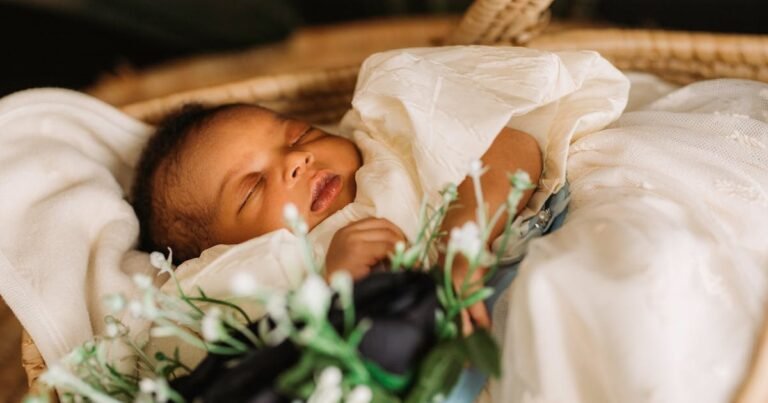
- Bassinet (if also getting a crib). Useful for room-sharing in the first 6 months. The AAP recommends room-sharing (not bed-sharing) for at least the first 6 months, ideally 12 months. A bassinet in the parents’ bedroom makes this practical. (Source: AAP) → When to switch from bassinet to crib
- White noise machine. The AAP recommends keeping volume at or below 50 dB, placed at least 7 feet from the baby’s head, and used only during sleep. (Source: AAP)
- Blackout curtains. Helpful for daytime naps and early bedtimes, especially in summer months.
- Nightlight. Dim, warm light for nighttime feedings and diaper changes without fully waking baby.
- Dresser with changing pad on top. More space-efficient and longer-lasting than a dedicated changing table. Serves double duty as storage.
You Can Probably Skip
- Crib bumpers. The AAP explicitly warns against them due to suffocation risk. Banned for sale in the US under the Safe Sleep for Babies Act (signed December 2022).
- Crib bedding sets with quilts and bumpers. Only the fitted sheet is safe to use in a crib. Quilts, bumpers, and decorative pillows are suffocation hazards.
- Dedicated crib mobile. Many babies show little interest. If used, remove by 5 months or when baby can push up on hands and knees.
- Elaborate nursery decor sets. Aesthetic only. No functional benefit for the baby.
Feeding
Feeding needs vary significantly based on your method: breastfeeding, formula, or a combination. Register conservatively, then add items once your feeding approach becomes clear.
Essential (All Feeding Methods)
- Bottles (6-8). Needed regardless of feeding method. Breastfed babies need bottles for pumped milk or supplementation. Start with a small variety pack to find what your baby accepts.
- Bottle brush. Required for cleaning narrow-neck bottles effectively.
- Burp cloths (8-12). High-use, high-laundry item. Register for more than you think you need.
- Bibs (6-8 to start). Drool bibs starting around 3 months. Feeding bibs starting around 6 months when solids begin.
- High chair. Not needed until approximately 6 months when starting solids. Baby must be able to sit upright with minimal support. → See our high chair buying guide
Essential (If Breastfeeding)
- Breast pump. Covered at no cost under the ACA for most insurance plans. Contact your insurer before purchasing. You may not need to register for one. → See our breast pump buying guide
- Breast milk storage bags. Also covered under updated ACA guidelines as “supplies.”
- Nursing pillow. Supports proper positioning and reduces back and arm strain during feeding.
- Nipple cream. For soreness, especially in the first weeks.
- Breast pads. For leakage. Available in disposable or reusable options.
- Nursing bras (3-4). Get fitted after milk comes in, as size changes significantly.
Nice to Have
- Bottle warmer. Convenient but not necessary. A warm water bath achieves the same result.
- Manual hand pump. Useful backup, portable, good for engorgement relief when away from your electric pump.
- Formula pitcher or dispenser. If formula feeding, makes batch preparation easier for overnight feeds.
You Can Probably Skip
- Bottle sterilizer. A dishwasher or boiling water achieves the same result. The CDC says sterilizing is optional after initial sterilization for healthy, full-term babies.
- Baby food maker. A regular blender or food processor works for making purees. Most parents use store-bought purees at least part of the time.
- Bottle drying rack. A clean dish towel works. Frequently cited as an item parents never actually use.
Gear and Travel
Essential from Day One
- Car seat. Non-negotiable. Required to leave the hospital. Two main options: (1) an infant car seat: rear-facing only, portable, clicks out of a base, typically used for the first 12-18 months; or (2) a convertible car seat: lasts longer (rear-facing then forward-facing) but not portable. Many families start with an infant seat, then switch to convertible. → See our car seat buying guide
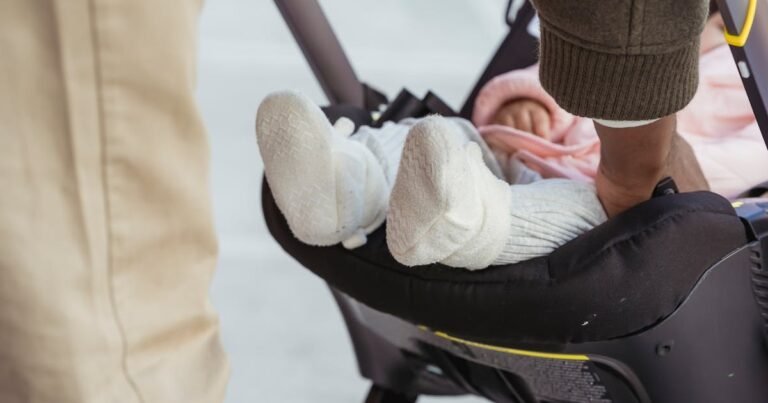
- Stroller. A travel system (stroller + compatible infant car seat) is the most practical day-one solution, since most stroller seats require the baby to sit unassisted (around 6 months). → See our stroller buying guide
- Baby carrier or wrap. Hands-free transport, soothes fussy babies, enables errands. Consistently cited as an item parents wish they had registered for earlier.
- Diaper bag. Needed from day one. Backpack style is the current preference for ergonomics and hands-free use.
Nice to Have
- Car seat mirror. Lets you see your rear-facing baby while driving.
- Stroller rain cover. Worth registering if you walk frequently. Some strollers include one.
- Car window shades. UV protection for rear-facing babies in sunny climates.
- Travel crib or Pack ‘n Play. Useful for travel or as a secondary sleep space. Must meet CPSC play yard standards.
You Can Probably Skip
- Stroller accessories (fans, bag hooks, phone holders). Niche items. Buy only if you discover a specific need after using the stroller.
- Shopping cart cover. Most parents skip this. A blanket works in a pinch.
Diapering
Essential
- Diapers (newborn and size 1). Don’t stockpile newborn size. Many babies outgrow them within 2-4 weeks. Size 1 is where most of the early months are spent.
- Wipes. Fragrance-free, hypoallergenic preferred for newborn skin. High-use item. Register generously.
- Diaper cream or ointment. Zinc oxide-based for prevention and treatment of diaper rash.
- Changing pad. Contoured pad with safety strap. Can go on a dresser top. No dedicated changing table required.
- Changing pad covers (2-3). Blowouts happen during changes. Have backups ready.
- Waterproof changing pad liners. Protect the pad itself. Commonly forgotten registry item.
Nice to Have
- Diaper pail. Debated item. A regular step trash can emptied daily works for many families. If you get one, models that use regular trash bags (rather than proprietary refills) save money long-term.
- Portable changing pad. For your diaper bag. Useful for changes in public.
- Diaper caddy or organizer. Keeps supplies organized for the nightstand or living room station.
You Can Probably Skip
- Wipe warmer. Babies don’t notice the temperature difference. Consistently cited as the number-one most-regretted registry item by parents.
- Dedicated changing table. A dresser with a changing pad on top is more functional and lasts beyond the diaper years.
- Diaper stacker. Decorative item with no functional advantage over a drawer or shelf.
Bath and Health
Essential
- Baby bathtub. Newborns get sponge baths until the umbilical cord stump falls off (approximately 1-3 weeks). Then transition to a small tub. Sink-insert styles are popular for the early months.
- Hooded baby towels (2-3). Keeps baby warm after bath.
- Baby washcloths (6-8). Multi-use: bath, face wiping, feeding cleanup.
- Digital rectal thermometer. Most accurate method for infants per AAP guidelines. Essential for the first year.
- Nasal aspirator. Newborns are obligate nose-breathers and cannot blow their own nose. NoseFrida or a bulb syringe (hospitals typically provide one).
- Baby nail clippers or file. Newborn nails are sharp and grow fast. Needed within the first week.
- Infant acetaminophen. Approved for infants 2 months and older. Have it on hand before you need it. Always confirm dosing with your pediatrician.
Nice to Have
- Cool-mist humidifier. Helpful for congestion, dry air, and croup. The AAP advises against warm-mist humidifiers due to burn risk.
- Baby hair brush (soft). For cradle cap and gentle grooming.
- Bath thermometer. Useful but you can test water with your elbow or wrist. Ideal bath temperature is approximately 98-100 degrees Fahrenheit.
- First aid kit. Pre-assembled baby kits include most essentials.
- Medicine dispenser or syringe. For administering infant medication accurately.
You Can Probably Skip
- Baby-specific “spa” products. Fragrance-free, gentle cleanser is all newborns need. Elaborate product lines are unnecessary.
- Sunscreen for newborns. The AAP recommends no sunscreen for babies under 6 months. Use shade and protective clothing instead. Register for mineral sunscreen closer to 6 months. (Source: AAP sun safety)
Clothing
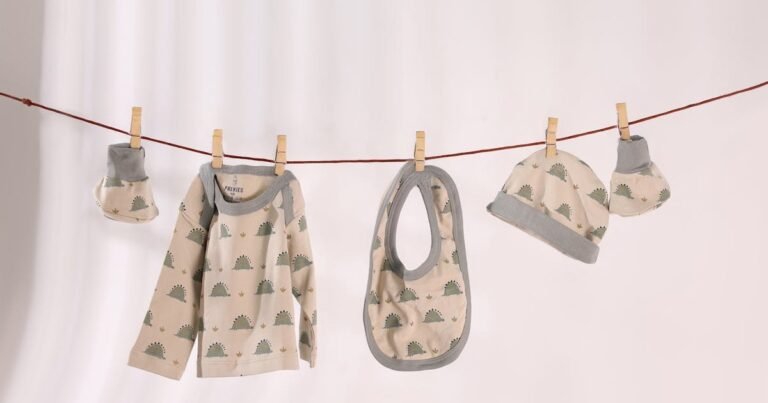
The number-one clothing mistake on registries: registering too many newborn-size items. Many babies fit newborn size for only 2-4 weeks. Some larger babies skip it entirely. Invest more in 0-3 month sizes.
What You Actually Need (Per Size)
Based on doing laundry every 2-3 days and accounting for 2-4 outfit changes per day (spit-up, blowouts):
| Item | Newborn | 0-3 Months | 3-6 Months |
|---|---|---|---|
| Onesies / bodysuits | 4-6 | 7-10 | 7-10 |
| Sleepers / footie pajamas | 3-4 | 4-6 | 4-6 |
| Pants / leggings | 2-3 | 4-5 | 4-5 |
| Hats | 1-2 | 1-2 | As needed |
| Socks | 3-4 pairs | 4-5 pairs | 4-5 pairs |
| Scratch mittens | 1-2 pairs | Not needed | Not needed |
| Outerwear / jacket | 1 (season-dependent) | 1 | 1 |
Common Clothing Over-Buys
- Too many newborn-size items. Focus on 0-3 month sizes instead.
- Multi-piece outfits and “sets”. Newborns live in onesies and sleepers. Multi-piece outfits are impractical for frequent changes.
- Newborn shoes. Babies don’t walk. Socks are all that’s needed.
- Too many seasonal items in one size. Baby grows through sizes every 2-3 months. A winter coat in size 0-3M won’t help if baby is that size in July.
Play and Development
| Item | Useful From | Priority | Notes |
|---|---|---|---|
| Play mat / activity gym | Birth (tummy time from 2-3 weeks) | Essential | One of the most-used items in the first year. Start with 3-5 minute tummy time sessions. (Source: AAP) |
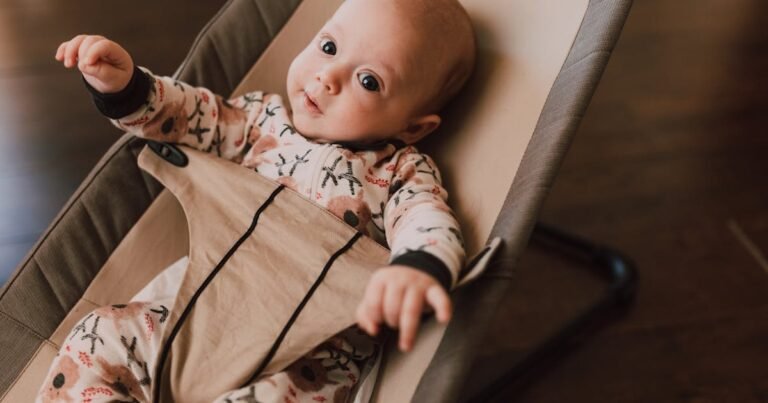
| Bouncer seat | Birth to ~6 months (or ~20-25 lbs) | Nice to have | Safe spot to set baby down during tasks. Not for sleeping. SIDS risk per CPSC. |
| Baby swing | Birth to ~12 months (or weight limit) | Nice to have | Excellent for soothing. Not a sleep surface. |
| High-contrast cards / books | Birth to ~3 months | Nice to have | Newborns see high-contrast patterns most clearly. Inexpensive developmental tool. |
| Soft rattles / teethers | 2-4 months onward | Nice to have | First graspable toys. |
| Board books | Birth onward | Nice to have | AAP recommends reading aloud from day one. |
| Activity center / exersaucer | ~4-6 months | Skip initially | Not needed early. Register closer to when baby has head control. |
| Doorway jumper | ~6 months+ | Skip initially | Physical therapists often advise limited use; can encourage toe-walking. |
Budget Planning
These estimates cover one-time baby gear purchases, not recurring expenses like diapers and formula. Actual costs vary by brand and retailer.
| Budget Tier | Estimated Gear Cost | With 3 Months of Consumables | Approach |
|---|---|---|---|
| Budget-Conscious | Under $1,000 | Under $1,500 | Focus on essentials. Buy secondhand where safe (see safety rules below). Store-brand diapers and wipes. |
| Mid-Range | $1,500 – $3,000 | $2,500 – $4,000 | Mix of new essentials and quality upgrades. Mid-range travel system, quality monitor, good high chair. |
| Premium | $3,500+ | $5,000+ | Premium picks across categories. High-end stroller, smart monitor, organic options. |
What NOT to Register For
These items are commonly registered but rarely used, based on broad parent consensus:
- Wipe warmer. Babies don’t notice the temperature. Universally cited as the most-regretted purchase.
- Bottle sterilizer. Dishwasher or boiling water is equally effective for healthy full-term babies.
- Newborn shoes. Decorative only. Socks suffice until the baby walks.
- Crib bedding sets. Only the fitted sheet is safe to use. Everything else is a suffocation hazard.
- Dedicated changing table. A changing pad on a dresser is more functional and lasts longer.
- Diaper stacker. A drawer works.
- Specialized baby laundry detergent. Most babies do fine with fragrance-free regular detergent.
- Too many swaddle blankets. Two to three is enough. Parents often end up with eight to ten from gifts.
Items Parents Wish They’d Registered For
- Waterproof mattress protectors. For the crib and for the parents’ bed (nighttime feeding leaks).
- Sleep sacks in multiple sizes. Parents register for newborn but forget 6-month, 12-month, and 18-month sizes.
- Baby carrier. Frequently undervalued on registries, becomes a daily essential.
- Portable sound machine. Separate from the nursery one, for car, stroller, and travel.
- Extra changing pad covers. Blowouts during changes are common. Having 3-4 covers avoids emergency laundry.
- Cool-mist humidifier. Useful for congestion, dry winter air, and croup relief.
- Second car seat base. For families with two cars.
- Postpartum recovery items. Ice packs, peri bottle, nipple cream. Not “baby” items, but critical for the parent.
Second-Hand Safety Rules
Always Buy New
- Car seats. Cannot verify crash history. May be expired (typically 6-10 year lifespan). Materials degrade with temperature cycling. May have unresolved recalls. NHTSA recommends buying new.
- Cribs. Drop-side cribs (banned 2011) may still circulate secondhand. Older cribs may not meet current CPSC standards. Cribs manufactured before June 28, 2011 should be assumed non-compliant. (Source: CPSC)
- Crib mattresses. Cannot verify firmness integrity or hidden mold and bacteria. Invisible depressions create suffocation risk.
- Helmets. Cannot verify impact history. Single-use protection.
Safe to Buy Used (With Inspection)
- Clothing. Check snaps, buttons, zippers for choking hazards. Wash before use.
- Toys. No sharp edges, peeling paint, or loose small parts. Check against CPSC recall database.
- Strollers. Verify model against CPSC recall database. Check frame integrity, brake function, harness condition.
- High chairs. Check recall status, harness function, structural stability.
- Baby carriers and wraps. No rips, tears, or broken buckles. Check fabric integrity.
- Books. Clean condition, no mold.
Before any used purchase: Check the CPSC Recalls database for the specific model. Verify the item has not been recalled and confirm the manufacture date.
FAQ
When should I start my baby registry?
Most parents start their registry between 12-20 weeks of pregnancy. Starting earlier gives friends and family time to purchase items before the baby shower (typically held around 28-32 weeks). You can always add items later.
How many items should be on my registry?
A practical registry has 50-100 items across all categories and price points. Include a range from small items (under $20) to big-ticket items to give gift-givers options at every budget level.
Should I register for diapers?
Yes, but strategically. Register for a variety of sizes (newborn, size 1, size 2) rather than stockpiling one size. Many babies outgrow newborn diapers within 2-4 weeks. Size 1 is where you’ll spend the most time.
Is it safe to buy a used car seat?
NHTSA recommends buying car seats new. You cannot verify whether a used seat has been in a crash, and materials degrade over time from heat and cold cycling in vehicles. Car seats also expire. typically 6-10 years from the date of manufacture. If you do accept a used seat, it should be from someone you trust, with a known history, within its expiration date, and not subject to any recalls. (Source: NHTSA)
Do I need a bassinet AND a crib?
Not necessarily. The AAP recommends room-sharing (not bed-sharing) for at least the first 6 months. A bassinet in your bedroom makes this practical. Some families use a crib from day one if it fits in the parents’ bedroom. Others start with a bassinet, then transition to a crib in the nursery around 4-6 months. (Source: AAP safe sleep guidelines)
What’s the most common registry mistake?
Registering for too many newborn-size clothing items and not enough essentials in the 0-3 month and 3-6 month ranges. Babies grow quickly, and most of the first year is spent in sizes larger than newborn.
Do I need a bottle sterilizer?
For healthy, full-term babies, the CDC says sterilizing bottles is optional after the initial sterilization. A dishwasher with a heated dry cycle or boiling water for 5 minutes achieves the same result.
Safety guidelines sourced from AAP, CPSC, NHTSA, and CDC as of March 2026. Budget estimates are approximate ranges based on US retail pricing. Check current guidelines and pricing before making purchasing decisions.