How to Choose Age-Appropriate Toys: A Developmental Guide
Disclosure: BabyNerd earns a small commission when you purchase through our affiliate links. You never pay extra. Read our full disclosure.
This article shares educational information based on published research. It is not medical advice. For concerns about your child’s health or development, consult your pediatrician.
Walk into any toy store or scroll through any retailer’s website, and you will face thousands of options, most of them marketed with words like “educational” and “developmental.” The problem is that those terms are not regulated. Any toy can call itself educational. So how do you actually figure out what is appropriate and genuinely useful for your child’s age and stage?
We dug into guidelines from the American Academy of Pediatrics (AAP), the National Association for the Education of Young Children (NAEYC), and the Consumer Product Safety Commission (CPSC) to put together a practical framework. No specific product picks here. Just what to look for, what to skip, and how to think about toys at each stage.
The 6 Features That Actually Matter
1. Safety Certification and Age Labeling
What it is: Every toy sold in the United States must comply with the Consumer Product Safety Improvement Act (CPSIA). Toys for children under 3 must pass small parts testing (ASTM F963 standard), lead content limits, and phthalate restrictions. The age label on packaging (“for ages 0-6 months,” for example) is not a suggestion. It reflects safety testing for choking hazards, material toxicity, and structural integrity.
Why it matters: The CPSC reports that toy-related injuries send approximately 150,000 children to emergency rooms annually in the United States. Choking on small parts is the leading cause of toy-related deaths in children under age 3. The age label is primarily a safety indicator, not a developmental one.
What to look for: A clear age label from the manufacturer. ASTM F963 compliance. For extra assurance, look for JPMA certification, which means the product has been tested by an independent laboratory against additional safety standards.
2. Open-Ended Play Potential
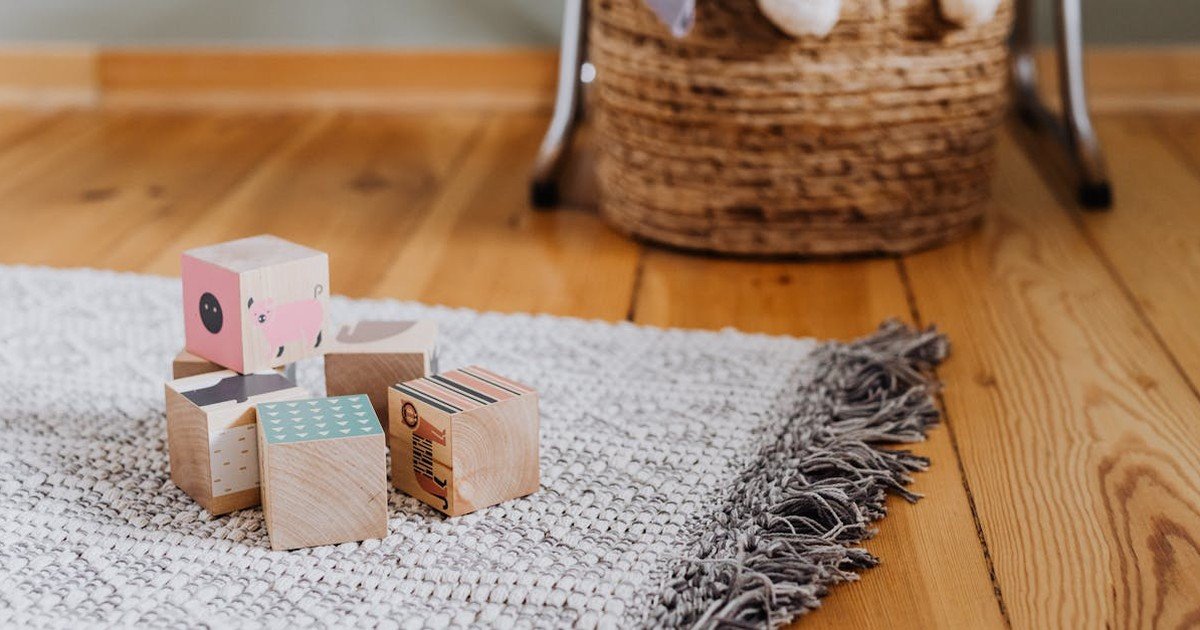
What it is: Open-ended toys can be used in multiple ways and do not dictate a single “correct” way to play. Blocks, stacking cups, play silks, and simple figurines are examples. A toy that plays a song when you press one button is closed-ended. A set of wooden blocks that can become a tower, a road, a bridge, or a wall is open-ended.
Why it matters: The AAP’s 2018 report on toy selection (Selecting Appropriate Toys for Young Children in the Digital Era) found that simpler toys encourage more creative and symbolic play than electronic or highly structured alternatives. Children who play with open-ended toys tend to generate more language during play and engage in longer play sequences.
What to look for: Toys with no batteries required. Items that can be combined with other toys. Materials that do not restrict how a child can interact (stackable, sortable, buildable). The fewer things a toy “does,” the more a child has to do with it.
3. Developmental Stage Alignment
What it is: Toys that match what a child is currently working on, developmentally. Not what they will be doing in six months or what a marketing team says they should be doing.
Why it matters: A 2022 study published in Frontiers in Psychology found that children’s toy utilization is significantly moderated by age-appropriateness. Children engage more deeply and for longer periods with toys matched to their current abilities. Toys that are too advanced lead to frustration and abandonment. Toys that are too simple lead to boredom.
What to look for: Match the toy to your child’s current skills, not their age on the box. A 10-month-old who is not yet standing does not need a push walker. A 2-year-old who is deeply into sorting and categorizing will get more from a shape sorter than a toy designed for pretend cooking. The CDC/AAP revised developmental milestones (updated 2022) provide a useful reference for what most children are doing at each age.
4. Sensory Variety
What it is: Toys that engage multiple senses: touch (textures), sight (colors, contrast), sound (rattles, crinkle), and eventually taste and smell in safe contexts. For infants under 6 months, high-contrast black and white patterns are more visually stimulating than pastels, because their visual acuity is still developing.
Why it matters: Sensory input drives neural development in the first three years. The NAEYC recommends toys that offer varied textures, weights, and sounds to support sensory integration. This does not mean the toy needs to be electronic or battery-powered. A fabric book with crinkle pages, textured patches, and a mirror engages multiple senses without any technology.
What to look for: Different textures on a single toy. Contrasting colors (especially for infants). Elements that make noise through the child’s own manipulation, not from a speaker. Opportunities for mouthing (if the toy is designed for that age group and made from food-grade materials).
5. Durability and Material Quality
What it is: How well a toy holds up to the way young children actually use things. Babies mouth everything. Toddlers throw everything. Preschoolers step on everything.
Why it matters: A toy that breaks into pieces becomes a safety hazard. Materials that degrade can expose small parts, sharp edges, or toxic compounds. Beyond safety, a durable toy has a longer play life and can be passed to younger siblings or resold.
What to look for: Solid wood over thin plywood or MDF. Silicone over cheap plastic for teething items. Fabrics with reinforced seams. No small components that could detach. For painted items, look for non-toxic, lead-free paint certifications. OEKO-TEX certification indicates textiles have been tested for harmful substances.
6. Encouraging Interaction Over Passive Entertainment
What it is: Toys that require the child (or parent and child) to do something, versus toys that perform for the child. A xylophone requires the child to strike it. An electronic piano that plays songs on its own while the child watches is passive entertainment in toy form.
Why it matters: The AAP’s toy selection report specifically recommends toys that promote parent-child interaction and collaborative play over toys that isolate children in solo screen or sound experiences. Toys that talk, sing, or flash lights can actually reduce the quantity and quality of language between parent and child during play. The child and parent both defer to the toy.
What to look for: Does the toy require the child to manipulate it? Does it create natural opportunities for a parent to narrate, ask questions, or play alongside? Can the child control the pace? Toys that respond to what the child does (cause and effect) are more developmentally useful than toys that perform independently.
What to Look for by Age
Here is a stage-by-stage overview based on AAP and NAEYC guidance, aligned with the CDC/AAP revised milestones (2022).
0-6 Months: Sensory Discovery
At this stage, babies are developing visual tracking, reaching, grasping, and beginning to understand cause and effect. They cannot sit independently yet and will mouth everything they touch.
- High-contrast cards or books (black, white, and red)
- Soft rattles that are lightweight enough for small hands to grip
- Unbreakable mirrors (babies are fascinated by faces)
- Textured fabric toys and crinkle books
- Play gyms with dangling objects at reaching distance
6-12 Months: Cause, Effect, and Movement
Babies in this range are sitting independently, starting to crawl or pull to stand, and developing object permanence (understanding that things still exist when hidden). They are also developing the pincer grasp, picking up small objects between thumb and finger.
- Stacking cups and nesting toys
- Soft blocks (for knocking down, not building yet)
- Simple cause-and-effect toys (push a button, something happens)
- Board books with thick pages they can turn themselves
- Balls of different sizes and textures
- Object permanence boxes (drop a ball in, it reappears)
12-24 Months: Exploration and Early Problem Solving
Toddlers are walking, climbing, and beginning to use words. They are learning to sort, stack, and fit objects together. Pretend play is just emerging. They imitate actions they have seen (talking on a phone, stirring a pot).
- Shape sorters (start simple: 3-4 shapes, not 12)
- Push and pull toys
- Large crayons and paper (for scribbling, not drawing)
- Simple puzzles with knobs (3-5 pieces)
- Play kitchen items, toy phones, dolls for imitative play
- Stacking and building toys (larger blocks, Mega Bloks)
- Water and sand toys
24-36 Months: Pretend Play and Language Explosion
Two-year-olds are talking in short sentences, engaging in pretend play with storylines, and developing fine motor control. They can follow simple instructions and are beginning to play alongside (and sometimes with) other children.
- Dress-up clothes and accessories
- Play food, shopping carts, tool sets
- Puzzles with 8-12 pieces
- Duplo or similar large building blocks
- Musical instruments (xylophone, drum, tambourine)
- Art supplies (washable markers, finger paint, play dough)
- Vehicles, trains, and tracks
3-5 Years: Complex Play and Social Skills
Preschoolers are building narratives in their play, negotiating with peers, and developing early academic skills. They can handle smaller pieces, more complex instructions, and longer play sequences.
- Construction sets with smaller pieces (standard Lego for ages 4+)
- Board games with simple rules (turn-taking, counting)
- Craft supplies for independent projects
- Puzzles with 20+ pieces
- Figurines and playsets for narrative play
- Science kits with parent supervision
- Books for early reading practice
What You Can Probably Ignore
“Educational” Electronic Toys
A toy that recites the alphabet when you press a button teaches letter sounds. But the AAP’s research suggests that the same learning happens more effectively when a parent sings the alphabet song with the child, because the interaction itself drives learning. Electronic toys that talk tend to reduce parent-child conversation during play. If a toy does most of the “work,” the child does less.
Age Acceleration Marketing
Marketing that implies your 6-month-old should be using a toy designed for 12-month-olds is not a sign that your baby is advanced. It is a sales tactic. Toys work when they match current abilities. A baby who is not yet sitting independently will not get developmental value from a ride-on toy, regardless of what the ad says.
Gender-Specific Labeling
Pink tools and blue kitchens are marketing decisions, not developmental ones. The AAP and NAEYC both recommend offering children a full range of play types regardless of gender. Construction, nurturing, physical, and creative play all support development across the board.
Questions to Ask Yourself Before Buying
- What is my child doing right now? Not what the box says they should be doing. Match the toy to the skill they are actively working on.
- Can this toy be used in more than one way? Open-ended toys provide longer engagement and more developmental value per dollar.
- Will this encourage us to play together? Parent-child interaction during play is one of the strongest predictors of language and cognitive development.
- Is this replacing screen time or adding to it? A tablet in a toy-shaped case is still a screen. The AAP recommends avoiding screen media for children under 18-24 months (except video calls).
- Do I already have something similar? Three shape sorters is not better than one. Variety across toy types matters more than depth within one type.
Common Mistakes to Avoid
- Buying too many toys at once. Research from the University of Toledo (2018) found that toddlers played longer and more creatively when they had access to 4 toys versus 16. Toy rotation (keeping some out and some stored) maintains novelty without the overwhelm.
- Ignoring the age label for safety reasons. The age recommendation on a toy is primarily a safety assessment, not a developmental recommendation. A 12-month-old should not play with a toy labeled “ages 3+” because it may contain parts small enough to be a choking hazard. The CPSC uses a small parts cylinder test: if an object fits inside a cylinder 1.25 inches in diameter by 2.25 inches long, it is a choking hazard for children under 3.
- Prioritizing quantity over quality. One set of high-quality wooden blocks will outlast and out-engage a dozen cheap plastic toys. Durable toys also have resale value and can be passed along.
- Expecting toys to replace interaction. No toy, no matter how well designed, substitutes for a parent talking, reading, and playing with their child. The toy is the tool. The interaction is the education.
Ready to Compare Specific Products?
- Lovevery vs KiwiCo vs Monti Kids: Play Kit Subscriptions Compared
- Most Popular Toys for 1-Year-Olds in 2026: What Parents Are Choosing
- What Parents Are Saying About the Lovevery Play Kit: A Review Summary
FAQ
How many toys does a baby actually need?
There is no magic number. Research suggests that fewer, higher-quality toys lead to longer and more creative play sessions. The University of Toledo study mentioned above found that toddlers with 4 available toys played more creatively than those with 16. Rotating toys every week or two keeps things fresh without buying more.
Are wooden toys really better than plastic?
Not inherently. The material matters less than the design. A well-designed plastic shape sorter can be just as developmentally appropriate as a wooden one. That said, wooden toys tend to be heavier (providing more sensory feedback), more durable, and free from electronic components that can reduce interactive play. They also tend to have a longer lifespan and better resale value.
When should I introduce puzzles?
Simple knobbed puzzles with 2-3 large pieces are appropriate around 12 months, when most children are developing the pincer grasp and beginning to understand spatial relationships. By 2-3 years, children can typically handle 8-12 piece puzzles. By age 4-5, puzzles with 20+ pieces become engaging. Match the complexity to your child’s current frustration tolerance and fine motor skills.
Are screen-based toys harmful?
The AAP recommends avoiding digital media for children under 18-24 months except for video chatting. For ages 2-5, they recommend limiting screen use to one hour per day of high-quality programming, co-viewed with a parent. Toys that incorporate screens (tablets, interactive video) fall under these same guidelines. The concern is not that screens are inherently harmful, but that screen time tends to displace the interactive, hands-on play that drives early development.
What about Montessori toys? Are they worth the higher price?
Montessori materials are designed around specific developmental principles: real materials over plastic, child-sized tools, and sequential skill-building. The philosophy aligns well with AAP recommendations for open-ended, interactive play. Whether the higher price is “worth it” depends on your budget and priorities. Many Montessori-style principles (natural materials, open-ended design, fewer toys) can be applied without purchasing branded Montessori products.
*BabyNerd has not independently tested any products mentioned in this guide.*