When to Switch From Bassinet to Crib: What Experts Say
This article shares educational information based on published research and official guidelines. It is not medical advice. For concerns about your child’s health, sleep, or development, consult your pediatrician.
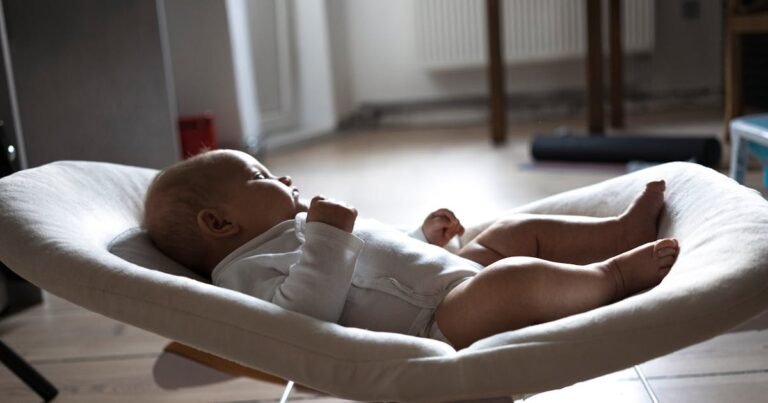
Most parents start asking when to switch from bassinet to crib somewhere around month three or four. right when the bassinet that seemed enormous at birth starts looking a lot smaller. The short answer: the American Academy of Pediatrics (AAP) recommends room-sharing (but not bed-sharing) for at least the first six months, and bassinets are typically used from birth through about five to six months. But the actual timing depends on your baby, your bassinet, and a handful of specific developmental signs.
Here’s what the guidelines say, what to watch for, and how to make the move without turning bedtime into a disaster.
What the AAP Says About Bassinets and Cribs
The AAP’s 2022 safe sleep guidelines (the most recent update as of March 2026) don’t specify a hard age cutoff for bassinets. What they do say:
- Room-sharing for at least 6 months is associated with a reduced risk of sleep-related infant death. Ideally 12 months, but the strongest evidence supports the first 6 months.
- Infants should sleep on a firm, flat surface that meets CPSC safety standards. whether that’s a bassinet, a crib, or a play yard with a firm mattress.
- No soft bedding, pillows, bumpers, or loose objects in the sleep space. This applies to both bassinets and cribs.
- Back sleeping only until the baby can roll independently in both directions.
The AAP treats bassinets and cribs as equally acceptable for infant sleep, provided they meet current safety standards. The transition between them is driven by the manufacturer’s limits and the baby’s development. not by age alone.
Five Signs It’s Time to Move to a Crib
No single sign means “switch tonight.” But if you’re seeing one or more of these, it’s time to start planning the transition.
1. Your Baby Has Hit the Bassinet’s Weight Limit
Every bassinet has a manufacturer-specified weight limit, and they vary more than you’d expect:
| Bassinet Type | Example Models | Typical Weight Limit |
|---|---|---|
| Standard bassinets | Graco Dream Suite, Fisher-Price Soothing Motions | ~15-20 lbs |
| Smart bassinets | SNOO Smart Sleeper | ~25 lbs |
| Bedside sleepers | Halo BassiNest Swivel Sleeper | ~20 lbs |
| Convertible smart bassinets | Cradlewise | ~33 lbs (bassinet mode); converts to crib |
Weight limits sourced from manufacturer specifications as of March 2026. Always check the manual for your specific model.
A baby in the 50th percentile for weight hits about 15 lbs around 4 months, according to CDC/WHO growth charts. That means a standard 15-lb bassinet could be outgrown well before 6 months. A SNOO at 25 lbs gives you more runway. most babies won’t hit that limit until 8-12 months, by which point they’ll likely have outgrown it developmentally anyway.
If you’re comparing bassinets and weight limits matter to you, we break down the differences in our SNOO vs Cradlewise vs Halo BassiNest comparison.
2. Your Baby Can Roll Over
This is the big one. Most bassinets have shallow sides and are not designed for a baby who can roll. Once your baby rolls from back to tummy. even once. check your bassinet manufacturer’s guidelines immediately. Many explicitly state that the product should be discontinued at the first signs of rolling.
Rolling typically starts between 3-6 months, according to the CDC’s developmental milestones. Some babies roll early. Some take their time. The milestone matters more than the calendar.
3. Your Baby Can Push Up on Hands and Knees
Pushing up on hands and knees usually comes after rolling, typically around 6-9 months. At this point, a baby can potentially leverage themselves against bassinet walls. This is a non-negotiable transition trigger for virtually every bassinet on the market. including smart bassinets. The SNOO, for example, lists “beginning to push up on hands and knees” as a reason to stop use, regardless of weight.
4. Your Baby Has Outgrown the Bassinet’s Length
Most bassinets are about 30-33 inches in interior length. A baby in the 50th percentile reaches roughly 26 inches by 6 months (CDC/WHO growth charts). Taller babies may start looking cramped earlier. If your baby’s head or feet are regularly touching the ends, they need more space. even if they haven’t hit the weight limit.
5. Your Baby Seems Restless or Cramped
This one is less clinical and more observational. Some babies start waking more frequently, bumping into the sides, or seeming generally frustrated in a smaller sleep space. It doesn’t always mean they need to transition. growth spurts and sleep regressions cause restlessness too. But if the restlessness coincides with approaching the weight or size limits, it’s worth trying the crib.
Bassinet Safety Standards vs. Crib Safety Standards
Both bassinets and cribs sold in the United States must meet mandatory federal safety standards enforced by the Consumer Product Safety Commission (CPSC).
| Standard | Bassinet (16 CFR 1218) | Full-Size Crib (16 CFR 1219) |
|---|---|---|
| Effective date | Mandatory since 2014 | Mandatory since 2011 |
| ASTM reference | ASTM F2194 | ASTM F1169 |
| Mattress firmness | Must be firm and fit snugly | Must be firm and fit snugly (no more than 1-inch gap between mattress and side) |
| Side height | Minimum ~9 inches above mattress surface | Minimum ~26 inches above mattress (at lowest setting) |
| Stability testing | Yes. tip-over and structural integrity | Yes. slat strength, hardware durability, mattress support |
| Weight/age limit | Manufacturer-specified; typically birth to ~5-6 months or when rolling | Up to 50+ lbs; typically usable through toddler years |
Standards information sourced from CPSC bassinet guidance and CPSC crib guidance as of March 2026.
The key difference: bassinets are designed for a shorter use window. Their lower sidewalls and smaller sleep surfaces are appropriate for young, immobile infants. Cribs are built for a much longer span and are engineered to contain a mobile, pulling-up, eventually standing child. That’s why the transition out of a bassinet is a safety question, not just a comfort one.
How to Make the Bassinet-to-Crib Transition Easier
Some babies barely notice the switch. Others protest loudly. A few strategies that pediatric sleep researchers and the AAP’s guidance support:
Start With Naps
Put the baby down for one or two daytime naps in the crib while still using the bassinet for nighttime sleep. This lets them get used to the new space during the lower-stakes daytime hours. After a few days to a week of successful naps, move nighttime sleep to the crib.
Keep Everything Else the Same
Babies are creatures of routine. If you change the sleep location, keep the rest of the bedtime routine identical. same sequence of bath, feeding, book, sleep sack, white noise, whatever your routine is. The AAP notes that a consistent sleep environment and routine support safer, more settled sleep.
Match the Sleep Environment
Room temperature, lighting, and sound should be as consistent as possible between the old setup and the new one. If you used white noise with the bassinet, use the same sound at the same volume near the crib. The recommended room temperature for infant sleep is 68-72 degrees Fahrenheit, according to the AAP.
Try a Gradual Approach
If your baby’s crib is in the same room as the bassinet, you can move the crib into the position where the bassinet was. Some parents find that maintaining the same physical location in the room helps. If the crib is in a separate nursery, the AAP recommends room-sharing for at least 6 months. so you may want to keep the crib in your room initially, or time the move to a separate room after the 6-month mark.
Give It a Few Nights
Three to five days of fussier-than-usual sleep is normal during a transition. If after a week the baby is still significantly more unsettled, it may be worth trying again in a couple of weeks. assuming the bassinet is still safe to use (weight and developmental limits not exceeded). If the bassinet limits have been reached, the transition isn’t optional.
What About SNOO Transition Specifically?
This comes up a lot, because SNOO parents have an extra variable: the baby is used to automated rocking and white noise that responds to crying. Going from a SNOO to a static crib is a bigger environmental change than going from a standard bassinet to a crib.
Happiest Baby (the company behind the SNOO) built a weaning mode into the device for exactly this reason. Weaning mode locks the SNOO at its lowest motion level and allows the baby to self-soothe without escalating rocking. The idea is to gradually reduce the baby’s dependence on motion-assisted sleep before making the full switch to a crib.
Happiest Baby recommends starting weaning mode around the time you’re planning to transition. typically around 5-6 months. Some parents run weaning mode for a week or two before moving to the crib. Others find their baby adapts quickly and skip it.
The SNOO’s weight limit is approximately 25 lbs, and its use should stop when the baby shows signs of rolling or pushing up on hands and knees. whichever comes first.
For a full breakdown of the SNOO’s features, limits, and how it compares to other bassinets, see our SNOO vs Cradlewise vs Halo BassiNest comparison.
A Note on the Cradlewise (Convertible Option)
The Cradlewise smart bassinet is worth mentioning here because it’s designed to sidestep the bassinet-to-crib transition entirely. It converts from a bassinet configuration into a full-size crib, with a crib-mode weight limit of approximately 50 lbs. If you’re using a Cradlewise, the “transition” is a configuration change to the same product rather than a move to a new piece of furniture.
That said, you’ll still need to watch for the same developmental milestones. When your baby can roll or push up, the bassinet configuration should be converted to crib mode regardless of weight. The sleep space needs to match the baby’s mobility.
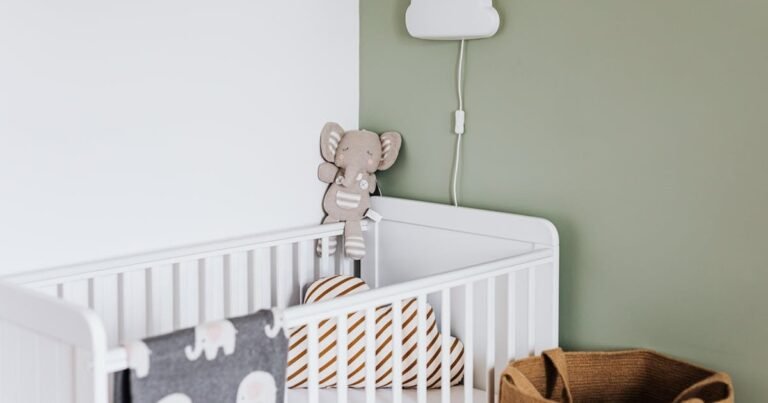
Safe Crib Setup Checklist
Whether you’re transitioning at 4 months or 6 months, the crib needs to meet AAP safe sleep guidelines:
- Firm, flat mattress that fits snugly in the crib frame (no more than a 1-inch gap between mattress edge and crib side, per CPSC standards)
- Fitted sheet only. no blankets, pillows, bumpers, stuffed animals, or sleep positioners
- Mattress at lowest position if the baby can sit or pull up (for the bassinet-to-crib transition, the middle setting is usually appropriate, but lower is always safer)
- No drop-side cribs. these were banned by the CPSC in 2011 due to entrapment and suffocation hazards
- Crib meets current CPSC standards (16 CFR 1219 for full-size cribs). If you’re using a hand-me-down crib, check the CPSC recall database
- No crib tents, netting, or aftermarket modifications
If you’re shopping for a crib, we’ll have more details in our upcoming most popular cribs of 2026 ranking. For help deciding what else belongs on your list, see our baby registry checklist.
Frequently Asked Questions
Can a newborn sleep in a crib from day one?
Yes. The AAP considers both bassinets and cribs safe for newborn sleep, as long as they meet CPSC standards and follow safe sleep practices (firm mattress, no loose bedding, back sleeping). Bassinets are popular for the newborn stage because they’re smaller, portable, and easier to keep next to the bed for nighttime feeds and room-sharing. But there’s no medical reason a newborn can’t start in a crib. (Source: AAP, 2022)
What happens if my baby exceeds the bassinet weight limit?
Stop using the bassinet. Manufacturer weight limits are set based on structural testing. exceeding them can compromise the stability, mattress support, or sidewall integrity of the bassinet. This is a safety issue, not a suggestion. If your baby is close to the limit and you’re not ready to transition, check your specific model’s documentation. Some bassinets have higher limits than you’d expect (the Cradlewise, for example, supports approximately 33 lbs in bassinet mode).
Should I stop room-sharing when I move the baby to a crib?
Not necessarily. The AAP recommends room-sharing for at least 6 months, ideally 12. If you’re transitioning to a crib before the 6-month mark, the AAP’s recommendation is to keep the crib in your room. Many families put a full-size crib in the primary bedroom during the first year, then move it to the nursery later. A mini crib or portable crib can make this easier if space is tight. (Source: AAP, 2022)
My baby sleeps great in the bassinet. Do I have to switch?
If the baby hasn’t hit the weight limit, hasn’t started rolling, and isn’t pushing up on hands and knees, there’s no rush. “Great sleep” is not a reason to change anything. The transition is driven by safety milestones (weight limit, rolling, pushing up) and the manufacturer’s guidelines. not by a fixed age. Some smaller babies comfortably use a bassinet until 6 months or beyond, depending on the model’s limits.
Is the SNOO transition harder than a regular bassinet transition?
It can be. Babies who’ve slept in the SNOO are accustomed to responsive rocking and white noise that activates automatically when they fuss. A standard crib doesn’t do that. Happiest Baby’s built-in weaning mode is designed to help. it gradually reduces the SNOO’s responsiveness so the baby learns to settle without motion. Anecdotally, some parents report a smooth transition, while others describe a few rough nights. Using weaning mode for one to two weeks before the switch and maintaining a consistent bedtime routine can help. (Source: Happiest Baby)
What about the 4-month sleep regression? Should I wait to transition?
The so-called 4-month sleep regression is a permanent change in sleep architecture. babies shift from newborn sleep patterns to more adult-like sleep cycles with lighter sleep stages, according to pediatric sleep research. It’s not something that passes and goes back to normal. Some parents prefer to transition before the regression hits (around 3.5-4 months) so the baby isn’t adjusting to a new sleep environment and new sleep patterns at the same time. Others wait until the regression settles (usually a few weeks). Neither approach has strong clinical evidence behind it. If your bassinet is still safe to use, timing is a judgment call. If your baby has outgrown the bassinet, don’t wait. the transition isn’t optional at that point.
Last updated: March 2026. This article cites the AAP’s 2022 updated safe sleep guidelines, CDC developmental milestone data, and CPSC safety standards current as of the publication date. BabyNerd is not a medical authority. always follow your pediatrician’s guidance for your child’s specific situation.